
Tag Archives: food

Supermarket, shmoopermarket

trolliesOnce upon a time, I didn’t think twice. I popped into my car, popped down to Sainsburies, popped things into my basket, popped the money out of my purse and popped back home. There was a notable absence of local food shops in my (temporary) part of South London – there had been a traditional butcher, but he’d closed down – and no local market. I went up to Borough Market some weekends and could always pop to Brixton or Tooting if I needed anything more exotique. In all fairness, the picture when I visited my family in the country wasn’t dissimilar, except there was no Sainsbury. (It was dangerously northern and there was a time when whippets in cloth caps ate Sainsbury’s managers, or so you’d have thought; leek-chomping, daffodil-wearing dragons evidently still present a problem.)

In the past twelve years things have changed, and not only because I now live – nominally – ‘twelve miles from a lemon’, or – really – fifty-five from fresh yeast. More and more people have begun to question the role of supermarkets, and not just the predictable knit-your-own-yoghurt bunch who started avoiding them in the late 1960s. Questions have been raised about their ethics, about the way they treat suppliers, about the impact the arrival of a supermarket can have on a high street or small community, about the insidious, big-brother-like monitoring of their customers. (Got a loyalty card? You are being watched… and in my case they are watching someone called Mrs Xanthe Throngdribble, who is apparently 96 but who still works as a brain surgeon and lives with her seventeen children. I like filling in forms, sometimes. Then there’s also their monitoring of the aforementioned Mrs Throngdribble attempting to take a photograph of trollies in a supermarket car park. She’s got a surprising turn of speed for someone in her nineties.)

I have friends who won’t go near any supermarket, or who avoid a particular chain. And that does put more restrictions on you when you live somewhere remote than I’m prepared to accept, whatever I may feel about their vaguely sinister power. Most of the time I can manage perfectly well with the few local shops and a branch of the Co-op, and that’s what is available without a twenty-mile round trip. When Tesco opened a smallish branch in the town ten miles away a friend and I took about two hours to wheel our way through the excited crowds (in the words of Roz from Frasier, ‘there’s a town that badly needs a bowling alley’), being just as excited ourselves and greeting each new discovery with loud cries: ‘They’ve got lemon grass! Lemon grass!!!’

Now I could use the fact that much of my work involves ingredients I can only get in supermarkets as justification, but it would be a Potemkin village of an excuse. I do not want to have my choice of food restricted just because I live somewhere magnificent but comparatively remote, but I do want to do the best I can by shopping locally as much as possible. It’s a balancing act, and I don’t want to be doctrinaire. But there is one exception. Asda I will avoid if I can, partly because I can get what I want elsewhere, partly because it requires a longer journey and the use of more expensive petrol, partly because I hate the dark, cramped branch concerned and partly because they are a Walmart company and I really, really, really hate Walmart’s labour – sorry, labor – practices.

All of this means that I can build up quite a shopping list for those occasions when I have to go to a larger town, one with at least one large supermarket and maybe two or three, and one which is wonderfully a breath away from a small branch of Waitrose. The larger town also contains the big hospital, and it’s quite normal to get a call along the lines of ‘I’ve got to go and visit Huw tomorrow, do you want anything from Waitrose?’. It reaches the stage when you resent a hospital appointment that doesn’t mesh with their opening hours.

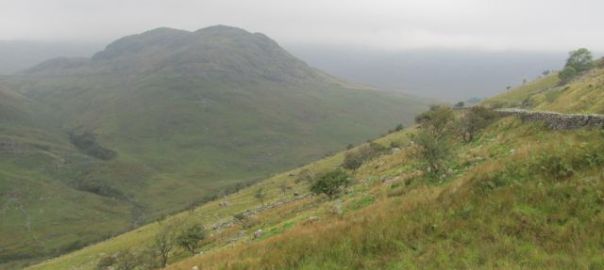
roadThere’s no more ‘popping’, of course. That’s partly because of the drive there – not one to be undertaken on a whim. There are essentially two choices, and they both take roughly the same time, about 90 minutes: the main road (roadworks, traffic jams at school time, motorbikes, caravans), and the mountains (roadworks, lycra-clad men on bikes, motorbikes, caravans). The main road is quite good, though with bottlenecks, but the mountain road is amazing – it’s behind the line of wall on the right and Snowdon is on the left out of shot. On a good day it doesn’t half beat the traffic jam at the bottom of Streatham Common; on a bad day it’s like doing your shopping by way of Mordor, complete with orcs in cycling gear looming out of the mist.

Last week I did some quick calculations. How much could I save by going to Bangor for X, Y and Z, allowing for the fact that I would have to spend A on fuel and take B hours to get there, at a potential hourly rate of C, given that I’m a self-employed writer and editor and not a 96-year-old brain surgeon? I factored in the N element – running out of Lingham’s Ginger Garlic Chilli Sauce – and the A/M/K essentials – getting stuff for friends – and set off.

Thursday was a Mordor day, but it was worth it. I got my X, Y and Z and saved at least £50 on those; I did my popping into to wild metropolis that is Bangor and had a drink in a coffee shop with a communal pine table and free WiFi, feeling all street and urban (think Blade Runner, oh, OK, I lie); I got my things in Waitrose. A few example purchases illustrate my point: some I could have bought anywhere but there was no point in making another trip when I was in Waitrose already (mushrooms, grapes); some I bought because I prefer the Waitrose own brands (small tinned tomatoes, anchovies); and some where enquiries about buying them locally would be met with ‘you must be joking’: pickling onions (why not???), camomile and lavender tea, linguine, Jarlsberg (I know some people think this Norwegian cheese tastes like rubber, but I like it), Greek basil, chilli crackers… and, of course, Lingham’s Ginger Garlic Chilli Sauce. I’m a happy bunny. So I really couldn’t be too much of a purist and abandon the supermarket altogether; getting even that little lot would have involved hours online, or trekking from small shop to small shop in a diminishing spirit of optimism, or growing my own. That’s an option I do explore, but you can’t grow bottles of Ginger Garlic Chilli Sauce. Xanthe Throngdribble is far too busy, plus she now needs another alias.

Really real seeds

I’ve always tried to grow at least some of my own food, even if that’s only been herbs in a window box. Now I grow much more, and last week I had a deep disappointment over beetroot, but at least they weren’t mine. I know that for some people the very existence of beetroot might be a deep disappointment, but I’m not one of them. I love beetroot, the earthy taste, the sharp fruity sweetness (if that’s possible), and most of all I love roasted beets chopped into a feta salad. Unfortunately I didn’t grow any myself this year – illness at planting time restricted my activity – and so when I saw some at the local produce market, I grabbed them. They were smaller than most, about the size of a golf ball, promising concentrated flavour.

Wrong. Texture, yes. Flavour? Nah.

You can grow things beautifully, with great care. You can harvest them when they should be tasty and succulent. But if you don’t have a good, tasty variety in the first place, what’s the point? And if you buy seed from the Big Boys your chances of getting a tasty end result are dimininshed. That’s because the Big Boys have to sell approved seed, and approved seed means commercial varieties. Varieties designed for the supermarket, by and large, where taste is not the first priority. Often the seeds on offer are F1 hybrids, so you can’t save the seed because they won’t come true, and they won’t have been bred to suit the domestic grower anyway. Oh, the copy on the packets or the in the catalogues may make them sound good, but stop a mo to consider what some of the wording means. ‘Good for freezing’ for instance, on a packet of French beans. All French beans are good for freezing. What this means in this context is that they’ve been designed (bred or engineered) to all ripen at the same time, which is what commercial growers need. Gardeners do not; we generally prefer our mad, insane, ripening season to be spread out a little bit, if only to ease the stress on our nerves and picking hands. Nor do most of us demand ‘good uniform fruit’ – another strap line – but supermarkets do. Flavour, they’re not so bothered about. And, almost inevitably, many adaptable and delicious (often local) strains of vegetables have been lost in the past 40 or 50 years.

This brings me to a company who are the first of my local food heroes. I’m stretching ‘local’ a bit here, but they are in Wales. South-west Wales, but Wales nonetheless: The Real Seed Catalogue. I try and order most of my seed from them, at least in the beginning – and that’s at their encouragement, because one of their aims, at the cost to their own profits, is to get people to save their own seed. So what’s different about them? That would be almost everything. They specialise in heirloom and heritage seeds, seeds for plants that have been shown to really work, seeds for plants that are packed with flavour.

kaleTake one example, Sutherland Kale. I first grew this a couple of years ago, and it’s a smasher. It’s also a perfect illustration of the philosophy behind Real Seeds. It’s a real heirloom variety, now thought to be extinct except for individual gardens – and the Real Seeds seedbank. It can withstand almost anything in my exposed garden (even cabbage whites, which have been hellish this year), and still perform. And it tastes great, so several ticks for this variety already. Then there’s how it came to be offered through Real Seeds, which illustrates the collaborative community they have built up. As the packet says: ‘This variety was saved for years by Elizabeth Woolcombe of West Drummie in Sutherland, who is now 93. She got it from a kale researcher [who knew there were such jobs?] called Angus Simmonds in the 1950s…’ and it was sent in by someone called V. Shilling. Not exactly a product of intensive development, then, designed to produce lots of kale for a giant supermarket distribution centre in, say, the third week of February. Maybe this year they’ll be adding Shetland Kale, as they have had seeds submitted for trial and it’s currently doing well. And they do trial; nothing gets in the catalogue or on the website unless it works. Everything is grown at their place in Pembrokeshire for family use; if it’s fiddly, fastidious or tasteless it doesn’t make the cut. But it’s not parochial; there’s a wide selection of oriental vegetables, for example, or tasty Bulgarian tomatoes alongside the more familiar Cosse Violette climbing beans and the Verde di Italia courgettes. And they all work.

Adaptability is vital; growing your own vegetables can be chancy enough without unconsciously trying to replicate commercially grown varieties. The small team at Real Seeds also make sure that they select the best seed in the first place, something most gardeners used to do but which is impossible on a highly commercial scale. They also continuously assess the range of seeds they offer, looking at areas which are a little light – runner beans, for instance, or endives – and deliberately going in search of appropriate possibilities. Some of the things they offer might be an acquired taste (I’m not quite sure why I ordered the cucumber I did one time, but let’s just say it didn’t make my cut, though some friends loved it), or completely unfamiliar – but I follow the advice of one of the River Cottage books and grow something unfamiliar every year. And I know that if I fancy growing huauzontle*, there’ll be decent seeds available, clear instructions and even a few recipes delivered with my seeds.

*A Mexican contribution, otherwise known as ‘Aztec greens’, Chenopodium berlandieri. Now you know…

Foraging the market

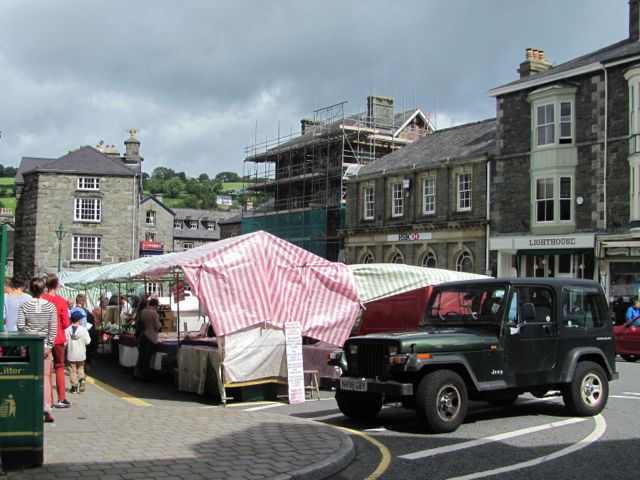
marketSunday saw the small but perfectly formed farmers’ market in Dolgellau and – by strange coincidence, ho ho – the gathering of our wool-spinning group, the Sunday Market Spinners. We’re a motley band but the first thing most of us do is hit the market; only then do we return to our woolly group and get on with nattering, fondling fibre and solving each others’ gardening dilemmas.

The market happens on the third Sunday of each month, except in January and February when the risk of frostbite is just too high. There are regulars selling everything from plants to vegetables, mutton to eggs, chocolate to goats’ cheeses, and the stallholders also usually include a beekeeper, a wonderful Kurdish baker and a smokery. Occasionally there are surprises, and they are really worth looking out for – and they are also one of the reasons why it’s a good idea to hit the market before hitting the spinning wheels.

On Sunday I had a shock while passing the Wildlife Trust’s stall. There, quietly and discreetly, partly sheltered behind some herb plants, were two tubs of chanterelles. giroles

I have a favourite foraging spot for chanterelles, but there haven’t been many this year – either that or the people staying on the nearby campsite have wised up – and even on a good year, supplies are limited. So stumbling upon these was wonderful: no clambering around in dripping woods, no sliding down muddy paths and dropping my finds in a stream, no unfortunate encounters with sylvan dog toilets. But I haven’t got a lot. So what to do with them? There aren’t enough for Antonio Carluccio’s wonderful cantarelli in salsina – with shallots and a simple creamy sauce – but I could serve them with pasta. Or I could mix them with other mushrooms, perhaps cook them off with onions, lemon juice and a little cayenne, serve on toasted sourdough. Nah – I’d miss the delicate taste, and I fancy my wild delights as the hero ingredients.

I know – girolles à la forestière. A traditional French recipe, adapted by Jane Grigson in Mushroom Feast and then by Roger Phillips in the wonderful (if patchily edited – missing ingredients, missing quantities) Wild Food. And I’ll have to adapt it again, heavily, to suit the fact that – strangely – I haven’t got a kilo and a half of the mushrooms and I also want to use less fat. However, it’s perfect for me because I have some good bacon to hand (we do excellent butchers round here)  and I’ve a great crop of potatoes, La Ratte – perfect for this recipe. In the event, my adaptation was even more significant because my chanterelles just didn’t give off the reported amount of liquid.

Girolles à la forestière – de ma façon
(serves 2)

250g chanterelles
250g new potatoes
1 tbsp olive oil or a sliver of butter
4 rashers of good back bacon, chopped into strips
a sprig of thyme
salt and black pepper

Carefully clean the chanterelles, brushing off any flecks of soil. Trim the ends of the stalks and chop any particularly large ones in half. Put the potatoes into a pan of cold water and bring it to the boil. Cook the potatoes until they are just done – test them while they are cooking and take them off the heat as soon as they are ready. Drain and set aside, then chop them into smaller pieces (to match the size of the chanterelles) as soon as they are cool enough to handle.

Put the oil in  a non-stick pan or large frying pan and cook the mushrooms over a medium heat for five minutes or so, stirring all the while, until they are just beginning to colour. Drain off any liquid and set the mushrooms aside. Increase the heat a little and put the bacon in the pan. Cook it for 5 minutes, until it too begins to colour and give off fat (if there is a lot, drain some of it off). Add the potatoes to the pan and  turn them over in the bacon fat. Allow them to brown a little, stirring again – this will probably take another 5 minutes – then return the chanterelles to the pan and scatter the leaves from the sprig of thyme over the potato, mushroom and bacon. Cook everything together for a couple more minutes, stirring, then season with salt and black pepper and serve immediately.

Serving: lovely with a green salad and a chunk of good bread. And a glass of something!

And now I need to get my boots and my stick and my basket. Because the man on the stall said there were lots of ceps around, and I think I know where he’s found them…

All change with ‘them purple things’…

Aubergines. Let me make that quite clear before anyone assumes anything else… this is a food blog, after all.

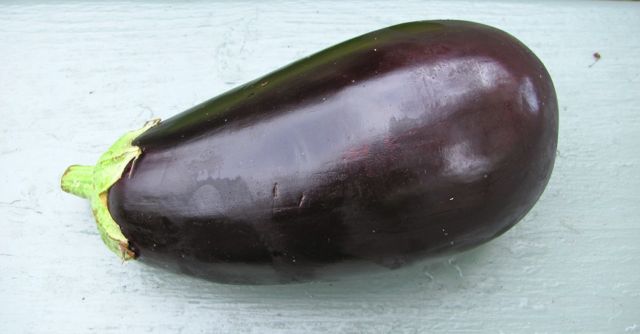
aubergineOnce upon a time It was almost impossible to get aubergines around here;  if I wanted to make ratatouille ten years ago I either had to grow my own or take a chance that a stray aubergine had escaped from captivity and sneaked onto the shelves at the local Co-op. There was no guarantee they’d be there – they were missing more often than not – and there was no guarantee they’d be in a decent condition if they were present. Ratatouille became an improvised treat, one organised on the hoof if aubergines were in stock, as did baba ganoush and any of a whole variety of smoked aubergine dips. When I saw them, I grabbed them.

The whole situation was summed up in a conversation my brother had when he was on a similar quest several years earlier. He had returned with his family to the North Yorkshire coast, had gone into one of the two local greengrocers (both – incidentally – very good, if what you wanted was ‘normal’ – quote). He looked around, didn’t see what he wanted:

Bro: ‘Have you got any aubergines?’
Girl behind till: ??? [Pause] ‘Do-REEN! Have we got any aubergines?’
Woman sticks head out of door at back. ‘Aubergines?’
Bro and GBT: ‘Yes.’
Doreen: ‘Are them them purple things?’
Bro: ‘Yes.’
Doreen: [Pause 2] ‘We had two of them but they went off.’

Today, by contrast, I wanted to make a ratatouille. The courgettes have gone a bit mad, possibly a swan song as they’ve also gone rather yellow, and I have to make lunch for a visiting friend. I had in mind a rather delicious ratatouille quiche, but I’d no ratatouille left in the freezer (it freezes so very well that some always ends up in there). So I took myself off to the Co-op, nice and early before all the holidaymakers filled up the car park, and bought my aubergine along with the rest of the shopping. And it’s a beauty, rotund and gleaming, in perfect condition. I also had my choice of peppers – unremarkable if you live in many places, but they were once also difficult to find in useable condition.

How very much things have changed in eleven years.

Then we had one branch of the Co-op, somewhat unreconstructed and five miles away, and another, even worse, ten miles in the other direction; they were my closest supermarkets. There was and still is a Spar in the village; there’s a great butcher but you wouldn’t want to rely on it for anything else. If I was in one of the towns – Bangor, perhaps, 30-odd miles away – or on a longer trip to, say, the bright lights of Llandudno, I would take a cool bag and make sure I popped into a bigger supermarket. I didn’t regard doing this as letting the side down because the Co-op let me down often enough, running out of exotica like bread and milk by 10 a.m.

Now? Well, while there isn’t the same selection that you’d get in a less remote area, things have improved vastly. And I do mean improved, despite the fact that one of the changes was the arrival of Tesco. It’s not an enormous branch, and I have had several arguments about its selection of goods (some used to appear during the summer season and then vanish – when I asked why once I was told ‘oh, the locals won’t buy things like that’; grr – I am ****** local and call me fussy but I actually wanted crème fraiche) it is a Tesco. To my delight this was shortly followed by both Lidl and Aldi and, even more to my delight, their presence seems to have revived, rather than killed, the local town. There’s even less of the holiday-season availability nonsense in Tesco, no doubt because when they come out with that sort of excuse you can pop round the corner and buy whatever outrageous thing you require in Aldi or Lidl. Yes, the Co-op closed soon after the trio arrived but it was often like being in a holiday airport in winter – empty and echoing, with a few people wandering about muttering to themselves. Probably about the fact that they were unable to buy bread.

Even better, it’s not just supermarkets. There were one or two local producers of particular things: Halen Mon, with their gorgeous sea salt; some cheesemakers and meat producers. Now there are many more. For instance, there are two excellent sources for local honey, several suppliers of delicious organic eggs, there’s a great chocolatier and even a mushroom farm, and obtaining mutton, great dry-cured bacon and a wonderful range of sausages is easy at one of the two local farmers’ markets. Yes, I still have a list for when I have to be in Bangor (Waitrose have opened a small but perfectly formed branch in Menai Bridge, plus the big Tesco there has many specialist ingredients I might need when editing and recipe testing), but now my list is full of the weird and wonderful rather than the basics. ‘Normal’ has been redefined, and not just in greengrocers.